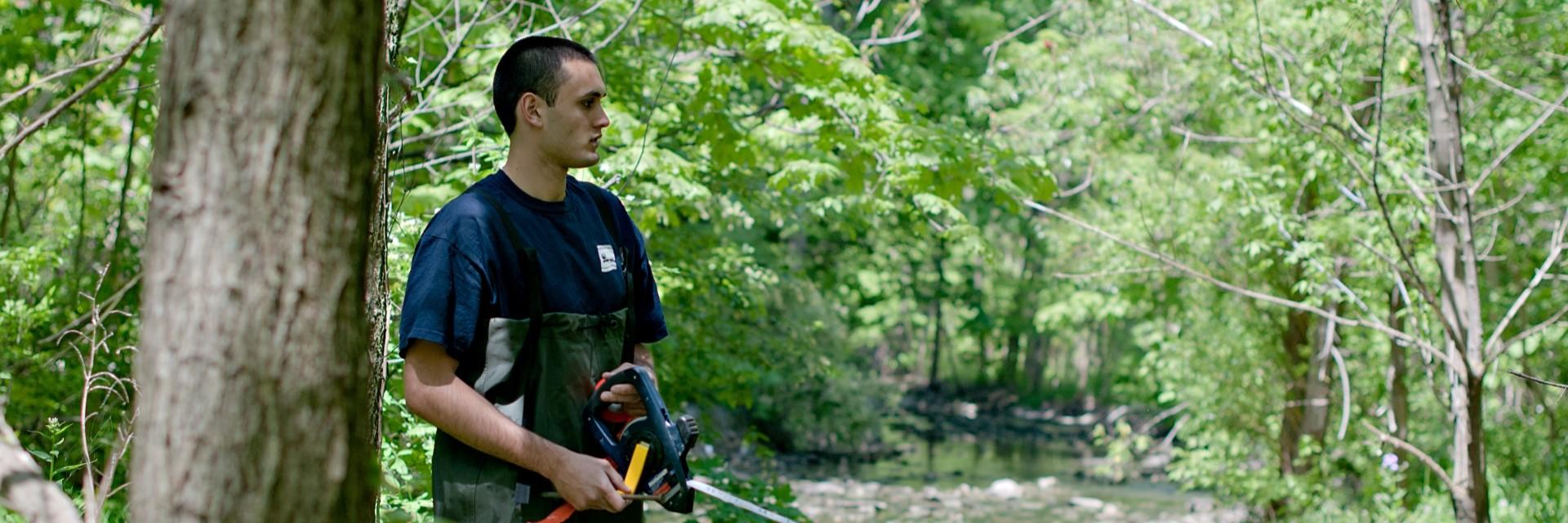
Wildlife Biology and Conservation Co-op Student Information
About The Program
The Wildlife Biology and Conservation major focuses on both the ecological and evolutionary factors that influence the sustainability of species and communities, and an understanding of how these factors can be used to manage natural systems or species that are at risk or invasive. The objective of this major is to provide students with an integrated foundation in three disciplines necessary to understand the origins, interactions, and protection of plant and animal diversity: evolution, ecology, and conservation biology.
This major will provide students with a unique interdisciplinary opportunity to study the causes, consequences, and conservation of plant and animal diversity. There is currently no other major in Canada that explicitly integrates ecology, evolution, and conservation into a single undergraduate degree. This major also builds on the University of Guelph’s long-standing reputation in the areas of biology and natural resources management.
The program offers a sound scientific background in preparation for careers in resource management, conservation, ecological consulting, teaching, and government service. Practical experience gained in lab, field, and research co-op work terms, combined with knowledge of strategies for conservation, management and policy, will broaden future career opportunities in this field.
Why Co-op?
As a co-op student, you will gain relevant work experience, build professional networks, and develop essential interpersonal skills needed to succeed in the workplace, all while getting paid and earning your university degree. Guelph’s co-op program is unique due to the exceptional level of support provided throughout the co-op experience. Students will complete a comprehensive course preparing them for the co-op employment process, and will receive guidance from a knowledgeable team of staff dedicated to their development and success.
Course Sequencing
| YEAR | FALL | WINTER | SUMMER |
|---|---|---|---|
| ONE | Academic | Academic | Off |
| TWO | Academic | Academic | Work |
| THREE | Work | Academic | Off |
| FOUR | Academic | Work | Work |
| FIVE | Academic | Academic |
Acquired Knowledge & Skills
Knowledge
Ability to demonstrate a broad understanding of ecology, evolution, and conservation biology and recognize the origins and current methods of protection of plant and animal diversity.
Application
Ability to assess the complex interplay between science, socio-economic factors and public opinion in the forging of public policy decisions and the value of interdisciplinary approaches to understanding complex problems. Hands-on experience in the field working with plants and animals in a variety of ecosystems, and the ability to assemble, analyze and evaluate biological data.
Communication
Written and oral communication skills for various stakeholders (public, private sector, policy makers, scientists).
Sample Jobs
There is a diverse selection of jobs made available to Wildlife Biology and Conservation co-op students, in government, academic, and private sectors. Students may work in a laboratory, in the field, or in an office setting. Below are some examples of positions that may be held by Wildlife Biology and Conservation Co-op students:
Conservation Technician
The student will assist with conservation management for protected natural lands by working closely with staff, partner organizations, local stewards and volunteers. Responsibilities include monitoring biodiversity targets and threats, invasive species removal, trail maintenance, visitor outreach, and conducting annual property inspections to ensure early detection and management of natural disturbances, vandalism, trespassing, etc.
Species at Risk Officer
This position will involve various recovery planning and protection activities related to species at risk and conservation. Duties may include species at risk recovery planning, compiling and manipulating species at risk occurrence data, and review of species recovery documents, recovery planning projects, and species at risk funding proposals.
Field Biologist
This position will provide the student with valuable experience in a diversity of fields related to terrestrial, wetland and aquatic biology. Duties include conducting field surveys including terrestrial, wetland and aquatic habitat mapping and inventories. Office duties include report preparation, collection and review of background information, data entry, writing field survey results, analyzing data, and researching topics as required.
Sample Employers*
- Environment and Climate Change Canada
- Nature Conservancy of Canada
- University of Guelph
- Conservation Authorities
*This shows a sample of recent co-op employers and will vary depending on employer recruitment needs. During a job search, students are encouraged to be actively engaged and are supported in establishing and maintaining their own personal contacts.
Salary Information
Students receive compensation from their employer for co-op work terms. The rate of pay will vary depending on a number of factors including the industry, the student’s program of study, and work term level. For your reference, a Co-operative Education Salary Guide is available on our website, which provides hourly rates (averages and ranges) for each degree program.