  • Employers & Partners
  • Hire a Co-op Student
  • Co-op Programs
  • Co-op Recruitment Timelines
  • Co-op Salary Guide
  • Co-op Student of the Year Award
  • Ethical Recruitment Guidelines
  • Hiring Incentives
  • Partner with a Course
  • Recruit Volunteers
  • Employer Information Sessions
  • Get the Word Out About Your Organization
  • Job & Career Fairs
  • Work Term Information for Co-op Employers
  • Current Students
  • Co-op
  • Co-op Forms
  • Career Education
  • Experiential Learning Opportunities
  • Find A Job
  • Get Support
  • Job & Opportunity Fairs
  • Volunteer
  • Your PCDR
  • Co-op Admission
  • Co-op Programs
  • Co-op Forms
  • International Co-op Students
  • Meet Us at Events
  • WEX
  • Alumni Services
  • Share Your Story
  • Faculty & Staff
  • Hire a Student
  • Offer an EL Course
  • Validate a Co-curricular Experience
  • Recruit Student Volunteers
  • Co-op Forms
  • Workshop Requests
  • Get EL Support & Resources
  • EL Hub Staff Login
PCDR
  • About Us
  • Staff Directory
  • AI Policy
  • About Experiential Learning
  • News
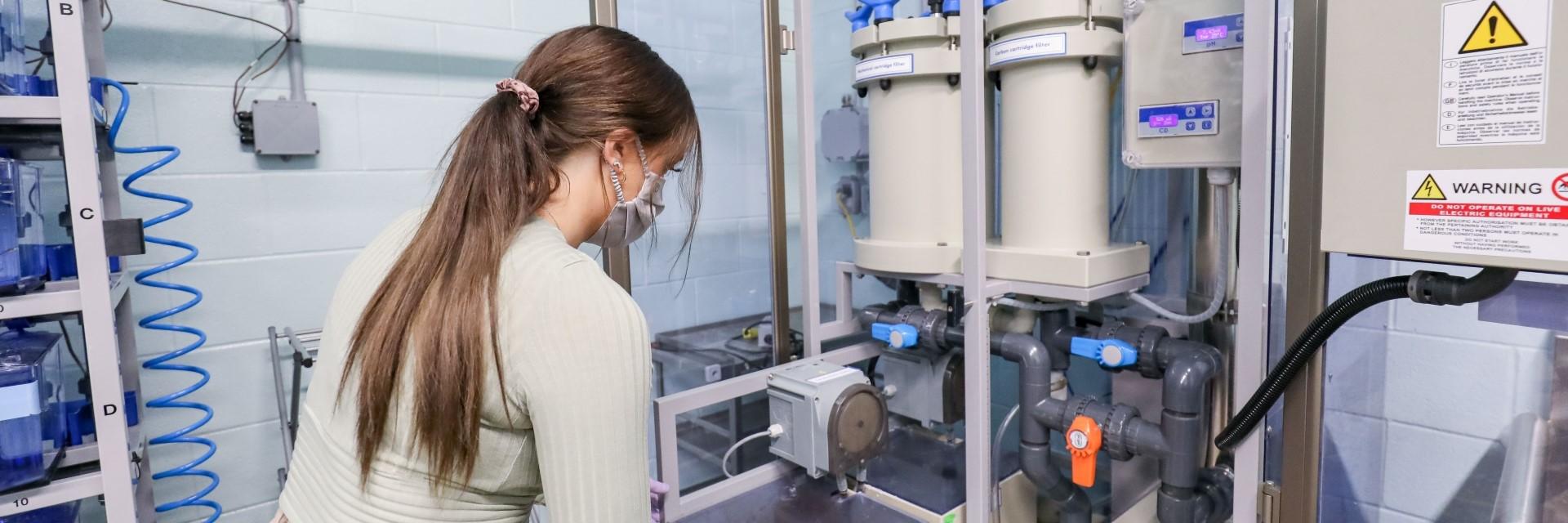
Person wearing a medical mask works in a water lab setting.

Water Resources Engineering Co-op Information for Employers

  1. U of G Homepage
  2. Experiential Learning Hub
  3. Employers & Partners
  4. Co-op Programs
  5. Water Resources Engineering Co-op Information for Employers

Adding Value to Your Team

Water is an invaluable resource. In our Water Resources Engineering program, students learn approaches to manage our water and land resources to ensure adequate clean water is available and design solutions to protect communities from floods and droughts. In the classroom and in the field, students learn to identify and evaluate watershed management options to protect and restore our groundwater, rivers and lakes. In addition to core engineering analysis and design courses, students will cover hydrology, heat and mass transfer, soil mechanics, groundwater quality, soil and water conservation, watershed systems design and environmental engineering systems.

Jump to section on page

  • Adding Value to Your Team
  • University of Guelph Advantage
  • Student Strengths
  • Co-op Work Term Schedule
  • Water Resources Engineering Course Sequencing

University of Guelph Advantage

  • Students begin their first work term after completing two years of their academic program and mastering the core skills needed to integrate into the workplace
  • Co-op students complete a full semester course focused on job search skills and professionalism in the workplace
  • Students are available for four or eight-month work terms
  • Recruitment timelines are flexible, and employers can find the right student through our efficient, streamlined employment process

Student Strengths

Knowledge

Solid knowledge of machine design, digital electrical and electromechanical systems and systems analysis. Exposure to a variety of field, laboratory and office work in various sectors including consulting, industry, research, and municipal, provincial and federal governments.

Application

Experience writing formal reports including proposals, engineering design reports and technical laboratory reports.

Problem Solving

Effective project management, problem solving, communication and teamwork skills acquired from hands-on design courses.

Understanding

Solid understanding of modeling and design software and experience with hydrological simulation tools.

Water Resources Engineering Work Term Schedule

YEAR

FALL

WINTER

SUMMER

ONEAcademicAcademicOff
TWOAcademicAcademicWork
THREEAcademicWorkWork
FOURAcademicAcademicWork
FIVEWorkAcademic

Water Resources Engineering Course Sequencing

Please see the current undergraduate calendar for more information.

Fall

  • General Chemistry I
  • Physics With Applications
  • Engineering and Design I
  • Calculus I
  • Engineering Analysis

Winter

  • General Chemistry II
  • Calculus II
  • Introduction To Programming
  • Engineering Mechanics I
  • Introductory Electricity And Magnetism

Fall

  • Fluid Mechanics
  • Introduction to Environmental Engineering
  • Geomorphology
  • Applied Differential Equations
  • Introduction to Co-operative Education
  • Probability and Statistics For Engineers
  • Engineering Systems Analysis

Winter

  • One Of: Introduction To Molecular and Cellular Biology or Introduction To Microbiology
  • Material Science
  • Water Management
  • Environmental Engineering Systems
  • Engineering and Design II
  • Numerical Methods
  • 1 Restricted Elective

Summer

Work Term One

Fall

  • Engineering Economics
  • Thermodynamics
  • Water Quality
  • Hydrology and Hydraulics
  • Soil Mechanics and Site Characterization
  • 1 Restricted Elective

Winter

Work Term Two

Summer

Work Term Three

Fall

  • Geographic Information Systems in Environmental Engineering
  • Soil-Water Conservation Systems Design
  • Urban Water Systems Design
  • 2 Restricted Electives

Winter

  • Engineering and Design III
  • Heat and Mass Transfer
  • Groundwater Engineering
  • 2 Restricted Electives
  • Water and Climate Justice or Science and Technology in a Global Context

Summer

Work Term Four

Fall

Work Term Five

Winter

  • Water Resources Engineering Design IV
  • Watershed Systems Design
  • 2 Restricted Electives

Learn More About Co-op at Guelph
U of G Experiential Learning

About Us

The Experiential Learning Hub is home to experiential learning opportunities on and off-campus, co-op, career education and community engaged learning.

Visit Us

Our commitment to accessibility

Sign up for our weekly e-news

Contact Us

Experiential Learning Hub

University of Guelph
50 Stone Rd E
Trent Lane Building 54
Guelph, ON N1G 2W1
519-824-4120, Ext. 52323
recruit@uoguelph.ca