Residence Learning Communities
Enhance Your Residence Experience
Join a Residence Learning Community (RLC)!
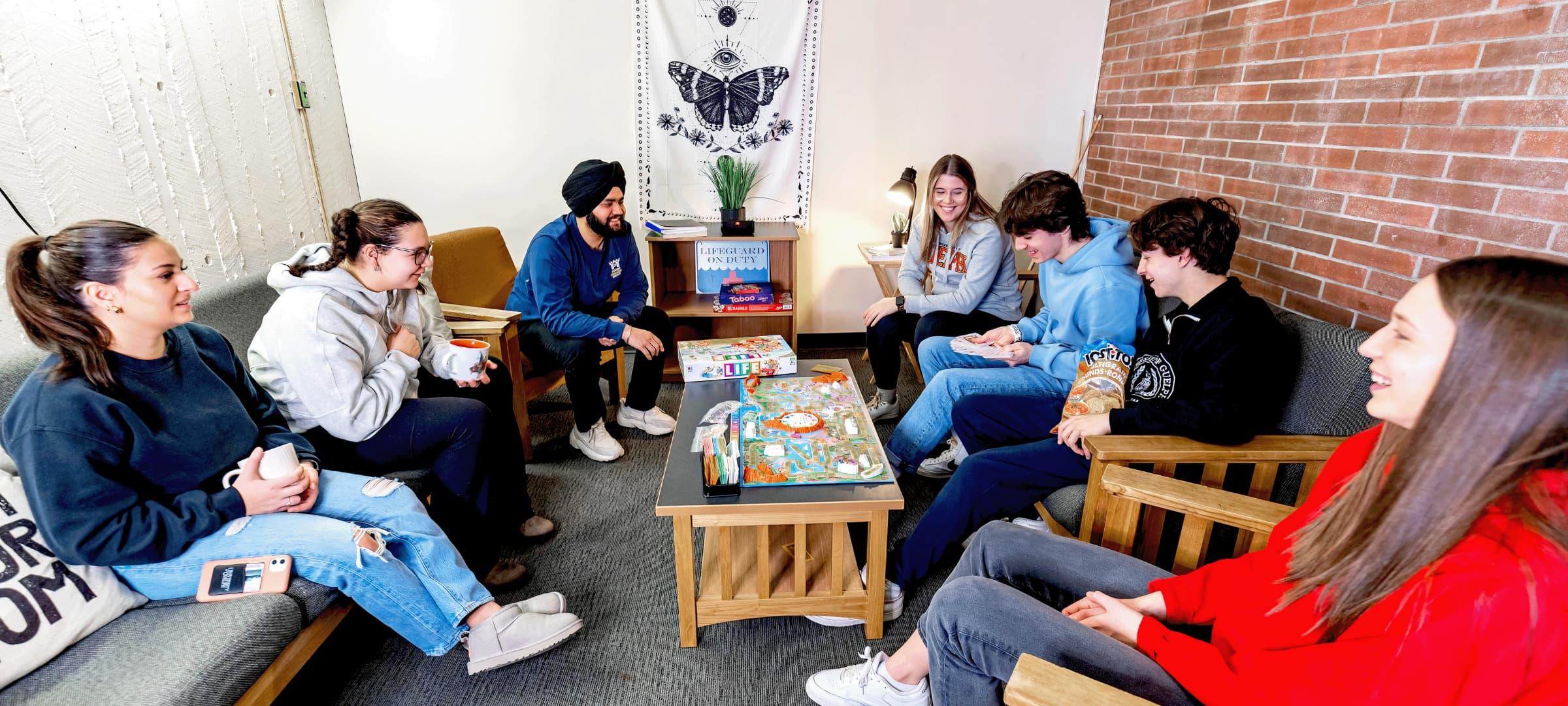
A variety of learning communities are available to support your learning in and outside of the classroom. The University of Guelph offers three types of Residence Learning Communities (RLCs) to help you build a strong community of friendships and support including Academic Learning Communities (ALCs), Living Learning Communities (LLCs), and Themed Learning Communities (TLCs).
Consider adding a community to your Residence Application!
- 5 Living Learning Communities
- Connect with a diverse group of like-minded individuals, and engage in a supportive, intentional community regardless of your academic program or identity.
- 2% Higher Performance
- Students living in a residence learning community achieve, on average, a 2% higher GPA in their first year.
- 16 Academic Clusters
- Offering first-year students in the same academic program to live and learn together in a supportive residence environment with opportunities for academic and social enrichment.
Academic Learning Communities (ALCs)
Looking for an academically enriched residence experience? Want to live, learn and interact with other students in your program? Interested in guidance from an upper-year student who has previously been in your position?
Where Are Academic Clusters?
Academic Clusters are small groups of first-year students who are in the same academic program and who live in a designated area of a residence hall. Academic Clusters are supported by upper-year mentors called Cluster Leaders who are in the same program as the students in the Cluster.
Benefits of living in an Academic Cluster
- Boost Academic Success: Students in learning communities achieve higher academic averages, with a 2% increase shown in a 2016 University of Guelph study.
- Smooth Transition to University Life: Academic Clusters help first-year students adjust to university and academic challenges.
- Build Friendships: Connect with peers in your program while living, learning, and socializing together.
- Dedicated Support: Benefit from a Residence Assistant and Cluster Leader for guidance and community building.
- Engaging Events: Participate in study sessions, exam reviews, skill workshops, and faculty-specific activities to enhance your experience.
We offer Academic Clusters for the following programs
Academic Clusters are in most residence halls across campus. The location often changes from year to year based on demand. If you choose to live in an Academic Cluster that choice will override your room/building preference and you will be placed wherever the Academic Cluster is located.
Living Learning Communities (LLCs)
What are Living Learning Communities (LLCs)?
Living Learning Communities bring together students with common interests and enthusiasm for the house's theme. These immersive houses of up to 50 students are vibrant places to live.
You are welcome to join an LLC no matter your academic program or identity. The only criteria are your enthusiasm for the theme, that you are committed to participating in house events, and that you want to be part of an intentional community.
Why Live in an LLC?
- Social and Educational Focus: Living Learning Communities (LLCs) thrive on events and activities that promote both social interaction and academic growth.
- Dedicated Residence Assistant: Each LLC benefits from a specialized Residence Assistant who fosters community by organizing theme-based events and creating a supportive environment.
- Community Building: Events are designed to unite the house, encouraging connections and creating lasting memories.
- Improved Academic Success: First-year students in learning communities often experience greater satisfaction and achieve a 2% higher academic average, as shown in a 2016 University of Guelph study.
Explore our 5 Different LLCs
- Arts House (Maids Hall): This LLC encourages students to explore and share their creative interests and talents.
- Eco House (Dundas Hall): This LLC encourages sustainable living and fosters meaningful engagement with environmental and social issues.
- Indigenous House (Dundas Hall): This LLC is an intercultural community that centers Indigenous ways of knowing, being, and doing.
- International House (Dundas Hall): This LLC supports students from all cultures and backgrounds with a focus on easing the transition for international students.
- Leadership House (Dundas Hall): This LLC offers opportunities for students to develop and reflect on their leadership abilities.
Themed Learning Communities (TLCs)
What are Themed Learning Communities (TLCs)?
Themed Learning Communities give you a chance to live with like-minded peers. You do not have to be in a specific academic program to join one of these communities. Choosing a Themed Learning Community is a wonderful way to tailor your residence experience to your needs. These communities do not offer specific events or programs on the theme. Themed Communities have a Residence Assistant who can help to moderate and guide the community to ensure the agreed-upon standards are met.
Students who wish to join a Themed Learning Community are responsible for maintaining the standards set for that community. Members of Themed Learning Communities must be willing to be active and respectful members of the community and abide by the Residence Contract. Themed Learning Communities have some limitations, and while Student Housing Services strives to promote community living, Themed Learning Communities are part of a larger residence community which might not abide by the same standards. For example, even in a Study Intensive Community, students should not expect absolute quiet.
Explore our 3 different TLCs
- Study Intensive Community: Located in our Lennox-Addington and East Village, our Study Intensive Community offers extended quiet hours and a study-focused environment.
- Substance-Free Community: Located in East Residence, students who request an alcohol-free living environment will be assigned with suitemates who have also indicated this preference.
- Varsity Athlete Community: Located in East Residence, students who are varsity athletes may request this residence community through their coach, allowing them to share space with others on a similar schedule.
How do I join a Residence Learning Community?
When completing your Residence Application, select your preferred theme(s) under the Residence Learning Communities section (e.g., Substance-Free, Arts House, or an Academic Cluster). To increase your chances of being assigned to one of these communities, make sure to list Residence Learning Communities as your top priority on the Assignment Priorities page.
For students interested in the Varsity Athletes Community, a referral from your coach is required.