Master of Cybersecurity and Threat Intelligence (MCTI)
Degree
- MCTI (Master of Cybersecurity and Threat Intelligence)
Program Type
- Coursework
Delivery
- On-campus
Entry Terms & Deadlines
Domestic:
- Fall (September): July 30
- Summer (May): April 30
- Winter (January): November 30
International:
- Fall (September): March 31
- Summer (May): October 31, 2026
- Winter (January): June 30, 2026
Duration
- Full Time: 12 months
- Part Time: 24 months
Cybersecurity is one of the fastest growing career fields around the world.
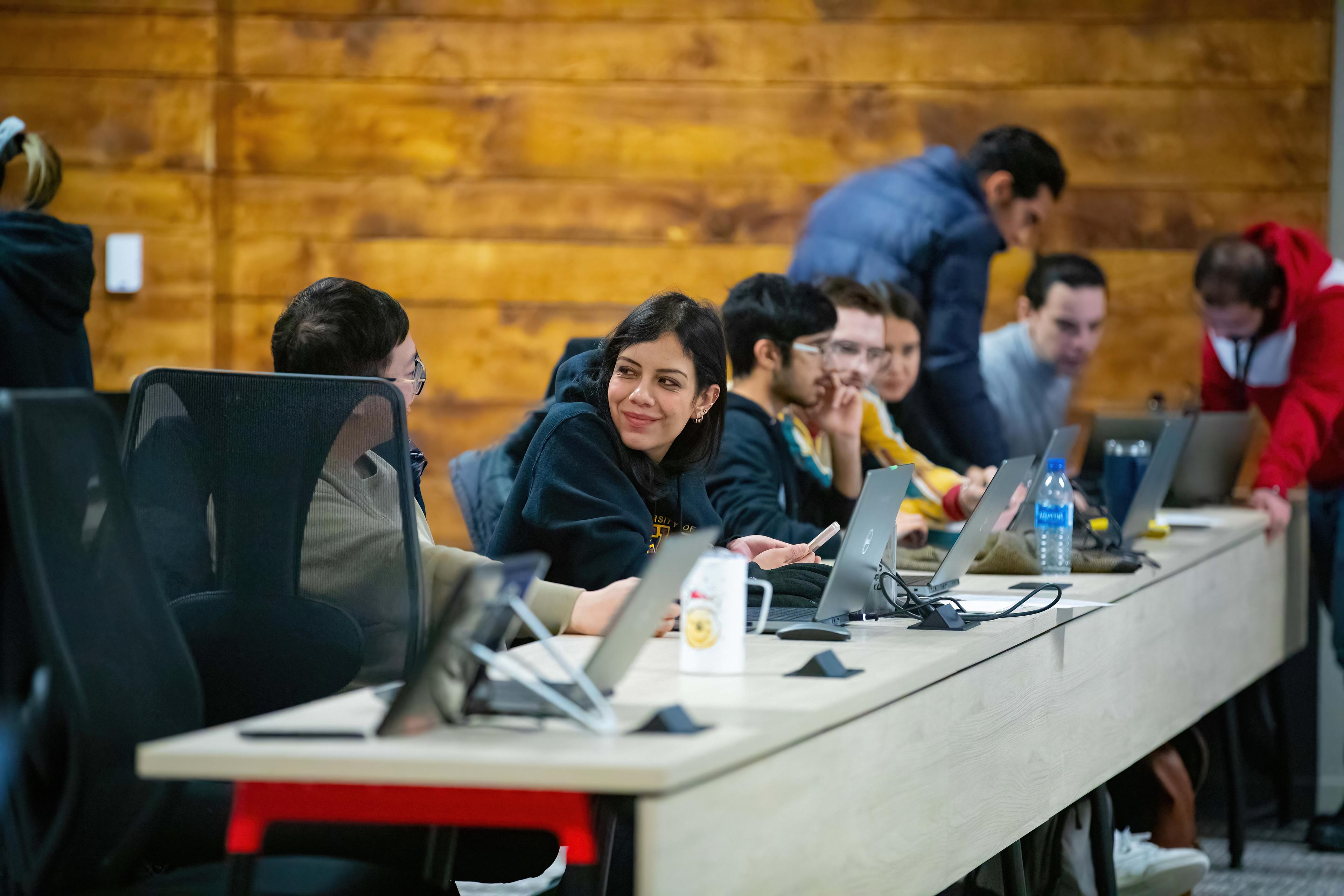
As Canada's only ONE-year Master Cybersecurity Program that focuses on Threat Intelligence (MCTI), the University of Guelph will help create the next generation of cybersecurity professionals. Located adjacent to Canada's Technology Triangle (CTT) and only a one hour drive from Toronto, our in-person program strongly connects to local industry and career opportunities. Graduates of the master's program will become leaders in security analysis and design, threat intelligence, penetration testing and malware analytics, cryptography engineering and digital forensics.
Cybersecurity is one of the fastest growing fields around the world. Threats to public safety are evolving at a rapid rate with the expansion of technology, networks and devices in existence and coming to market.
Fill the Talent Gap
Our graduates are equipped to help close the significant gap between skilled cybersecurity professionals and the need for this expertise.
Relevant Topic Areas
Topic areas include: Threat Intelligence, Security Architecture, Cryptography, Public Safety, Digital Forensics, Attacks and Defence. Artificial Intelligence, Privacy.
Part-time and full-time course load
Complete the program in as little as one year, or up to two, providing flexibility for your career pathway in Canada.
Those considering cybersecurity graduate studies might also be interested in U of G's Master of Cybersecurity Leadership and Cyberpreneurship program.
Why a degree in cybersecurity?
MCTI graduates enter exciting careers, growing an area that is advancing research and playing a major role in industry and consumer products around the world. Here are just a few careers our alumni choose to Improve Life:
- Security Architect
- Security Engineers
- Security Analyst
- Penetration Tester
- Forensic Analyst
- System Administrator
- Cybersecurity Consultant
- Vulnerability Analyst
Degree Details
Faculty/College: College of Computational, Mathematical, and Physical Sciences; School of Computer Science
Degree name: Master of Cybersecurity and Threat Intelligence (MCTI)
Delivery method: On-campus
Start dates: Fall, Winter, Summer
Length: 12-24 months
Program load: Part-time, Full-time

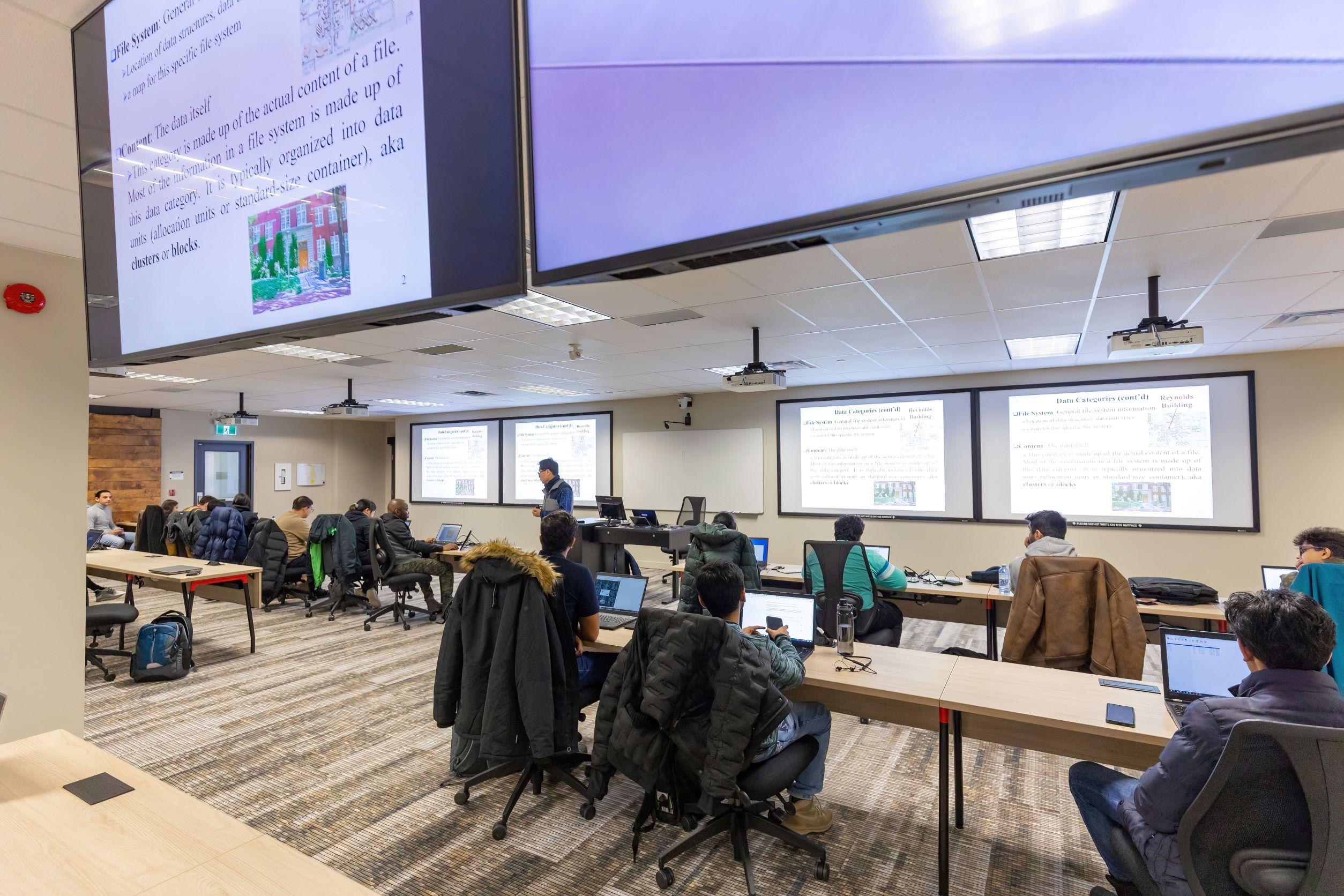
State-of-the-art learning environment
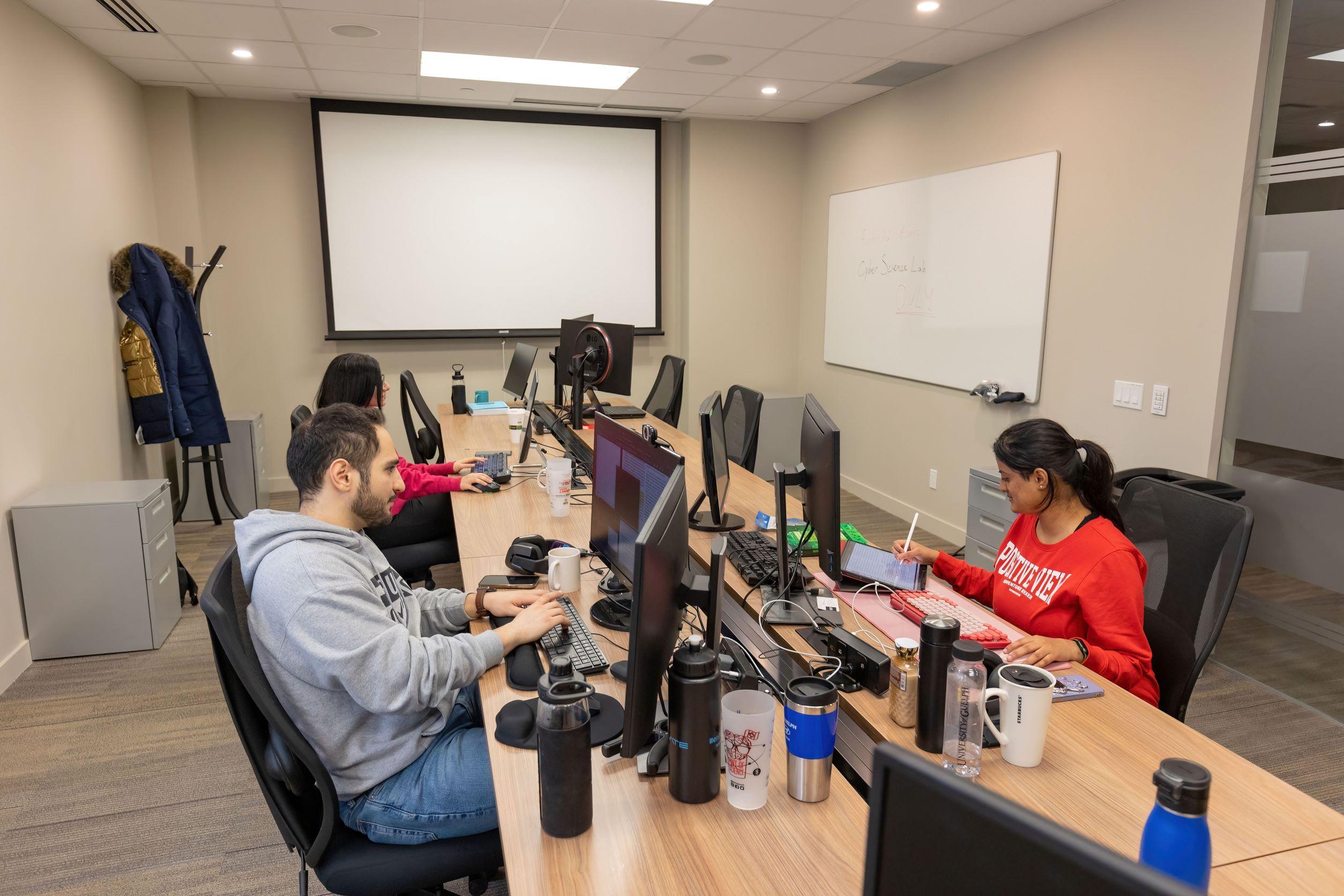
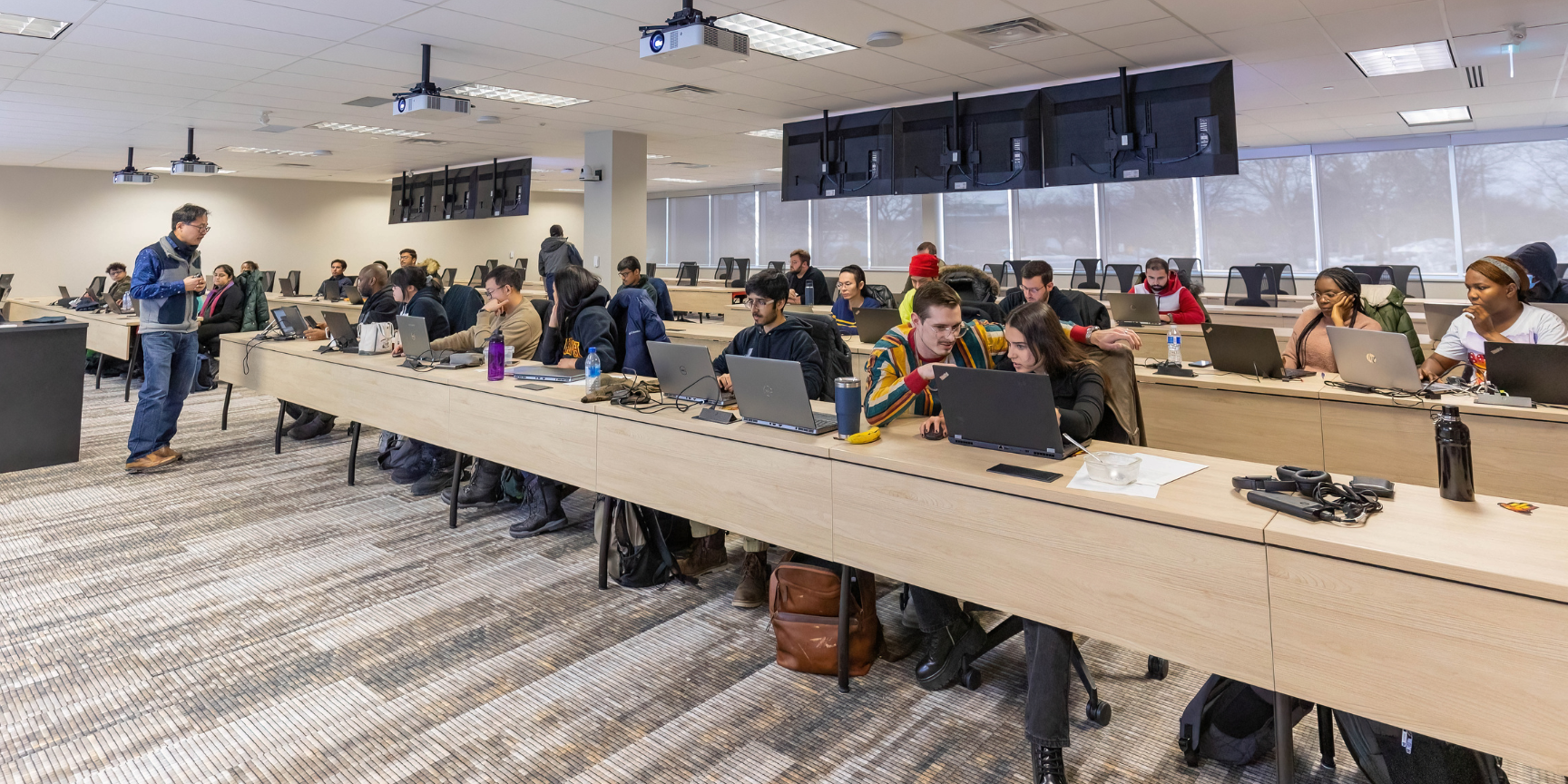
The University of Guelph has invested over $4M in a new state-of-the-art research, teaching and cybersecurity innovation facility. The 4,000-square foot facility opened in January 2023. It offers dedicated space to equip our Master's students with practical learning experiences in the classroom and collaborative work spaces.
Gain valuable experience through internships
MCTI students will have the opportunity to apply for prestigious internships with many of our prominent industry partners. Research-oriented students will have the opportunity to work on a cutting edge cybersecurity research project with one of our world-renowned faculty members. Project placements are encouraged, but not guaranteed.
Depending on your cohort, students will complete industry or research projects in either the summer or fall semester.
Hear from two current students
"There is a deficit of cybersecurity people, and here in Canada, there is a lot of opportunities. All the companies need to have a cybersecurity team and there's no people! So that's why this program is very interesting and it's very important." - Gessuri Garcia
"I have a lot of chances to talk to different C-level individuals in the IT industry, especially in the Toronto area... Technology is changing every day. You need to be very agile and very adaptive and very proactive to learn new stuff. " - Milton Kwan
What you will learn - course outline
"We're approaching a cyber-security talent shortage of 2 million people worldwide in the next 3 to 5 years. Every cyber-security provider can contribute, and when we're joined by respected education institutions like the University of Guelph, our combined effort makes the world safer."
Christopher D. Young, Former CEO, McAfee
Program Information
Contact Us
Program information, including admissions, completion time, course offerings, and other general information can be found on this page.
Please direct all other program inquiries to our MCTI Graduate Admissions Specialist at cyberapps@uoguelph.ca.
Our team is unable to make recommendations about specific application decisions and can only reflect requirements as outlined on this page. We are also unable to give specific feedback based on decisions from the admissions committee. We thank you for the interest in UofG. We do our best to support you through the application process.

An hour southwest of Toronto, the city is home to one of the most specialized universities in Canada. Guelph attracts young, brilliant talent, and today it ranks #13 among Canada’s small cities for Young Adults. The citizenry is also well-educated, ranking #12 in Educational Attainment.

"Guelph has been voted in the top 10 small cities in all of Canada. With an unemployment rate of 3.8%, the city boasts a strong potential for new graduates in various sectors of the economy. Guelph is one of the best cities to easily find employment."

"In addition to a strong work-life balance, Guelph is considered very safe, with a high safety index of 69.57 and a considerably low crime index of 30.43. A preferred destination for relocating families, Guelph has a longstanding trend of ranking in the top 10 safest cities in Canada"

The shortage of cybersecurity workers in Canada is so acute that even the national cyberspying agency can’t get all the people it needs. Across the country, one in six cybersecurity jobs goes unfilled, according to the International Association for Information Security Leaders.