
Lang MBA Program Overview
Become a Responsible Business Leader.
The Lang MBA is an intensive and flexible graduate program delivered in two formats to fit your learning needs. The 2-year online program is ideal for professionals working in a wide range of industries seeking to advance their careers. The 1-year in-person MBA is ideal for recent graduates seeking to rapidly develop their competencies for the employment market.
- 1
- Introduction to the MBA course
- 2
- 3.5-week courses
- 9
- 7-week courses
- 2
- elective courses or major research project

Program Overview
Students complete 6.0 credits:
- Introduction to the MBA
- MBA Core courses:
- Two 0.25-credit course delivered over 3.5 weeks each
- Nine 0.5-credit courses delivered over 7 weeks each
- Two 0.5-credit elective courses OR 1.0 credit Major Research Project
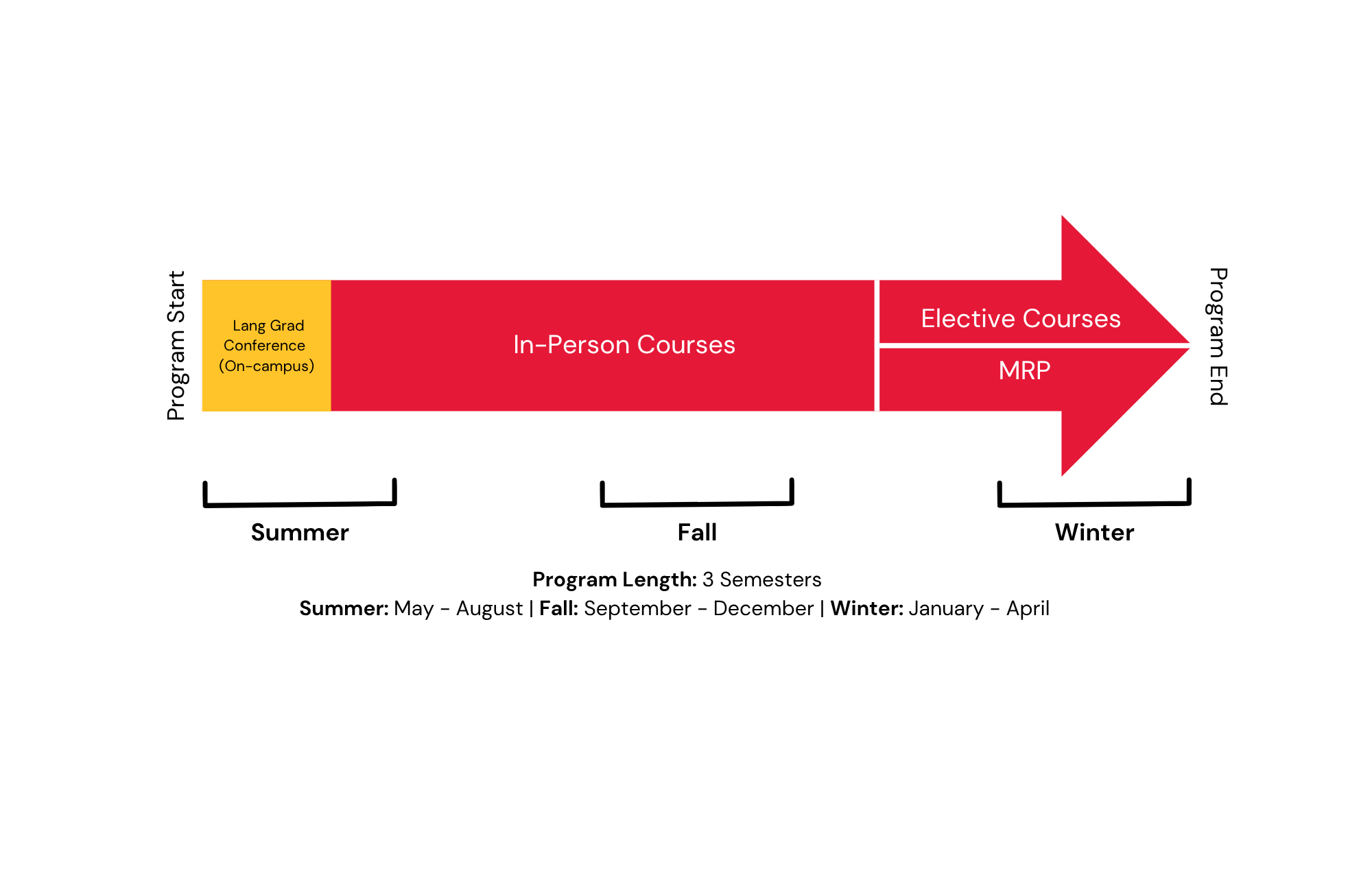
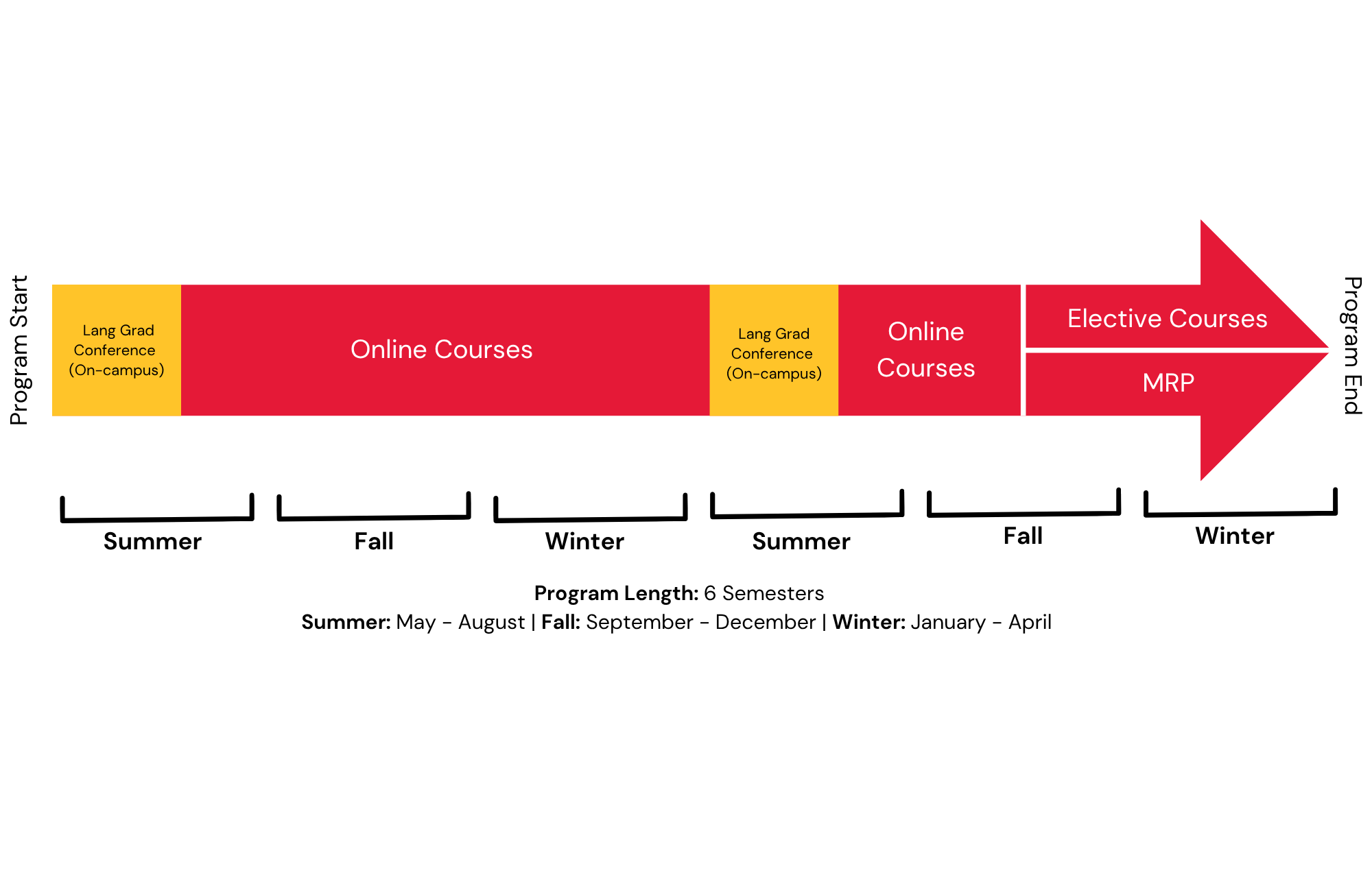
Lang Grad Conference
A career-defining experience where you will learn from our world-class faculty, alumni and experts across various fields. The Lang Grad Conference brings some of the brightest minds from around the world to share their experiences and insight for you to enhance your learning and make new connections between your courses and real world issues.
Network and collaborate with your cohort who work in a diverse mix of sectors and positions. You will not only learn new strategies and skills needed for your career advancement, but also make connections with your classmates, alumni and faculty that will last a lifetime.
Lang MBA Courses
BUS*6060 - Introduction to the MBA: This course provides an introduction to the Master of Business Administration program, including an overview of the program learning outcomes, academic and professional expectations, and learning environment. Students participate in professional development activities such as workshops and keynote addresses related to contemporary business issues.
BUS*6140 - Foundations of Human Resource Management: This course examines the essential human resource management functions of planning, staffing, employee development, compensation, health and safety, labour relations, and legal compliance, in a variety of organizational settings.
BUS*6180 - Financial and Managerial Accounting: This course emphasizes the gathering and use of financial information to facilitate effective financial and management decisions. Cases are used to approach the subject from the perspective of the user of accounting information rather than that of the supplier.
BUS*6200 - Financial Management: The course takes the viewpoint of the senior financial officer of a commercial enterprise. The focus is on the management of cash, accounts receivable, inventories and capital assets, as well as on the sourcing of funds through short-term liabilities, long-term and owners' equity.
BUS*6440 - Business Analytics: In this course, students learn how to analyze and visualize statistical data to make evidence-based business decisions. Students will work with data using established statistical techniques to generate findings and interpret and communicate those findings to make practical managerial decisions.
BUS*6700 - Strategic Management: An integrative course which draws together the conceptual theories and models of the graduate program core. Utilizes conceptual, analytical, problem identification, and problem-solving skills.
BUS*6790 - Operations Management: This course applies operations research theory and practices to management problem solving and decision-making. The focus is on modeling service and product delivery systems and major emphasis is placed on managerial problems in food and agribusiness organizations.
BUS*6850 - Marketing Strategy: An advanced course in marketing and consumption, students will explore topics including marketing theories, models, and specific subsets of marketing such as pricing, consumer and industrial-buyer behaviour, distribution, services, and service-delivery concepts. Students will be expected to identify and prioritize strategic marketing challenges and objectives and understand the importance of market intelligence and core competencies of the organization to develop a successful marketing strategy, recommend and justify competitive marketing strategies, design and critique marketing tactics that are consistent with an organization’s marketing strategy. As marketing principles are not unique to any industry, students enrolled in sustainable commerce, agribusiness & hospitality, food and tourism will participate in the same concept discussions and work on same case studies.
LEAD*6200 - Leadership of Organizational Change: This course studies the role of leadership in the management of change within an organization and the changes required of management. The course examines the development of trust, the building of organizational loyalty, and motivation and inspiring of high performance teams.