
PhD Human Health and Nutritional Sciences
The PhD in Human Health and Nutritional Sciences program focuses on physical activity and diet as powerful lifestyle determinants of human health. The interaction between genetics and environmental factors, including lifestyle, ultimately determines the health of an individual.
Tap into the Department of Human Health Sciences' research strengths in nutritional and nutraceutical sciences, general and exercise physiology, and biomechanics and neurophysiology, with a focus on lifestyle, genetics and human health. Past doctoral theses have focused on aging, diabetes, obesity, cardiovascular disease, nutrition and exercise, biomechanics, metabolism, and neuroscience, among other topics.
Graduates end up careers in academia, industry, or professional practice, including in health care.

Degree Details
The majority of PhD students’ time is devoted to research in fulfilment of the dissertation requirement. Coursework can be established through discussion with the student's advisory committee.
Students can choose one of three specializations:
- Biomechanics and Neurophysiology
- Nutrition, Exercise, and Metabolism
- Nutrition and Nutraceutical Sciences
PhD students will become candidates for the PhD degree upon completion of a qualifying examination, which must be conducted no later than the fifth semester of the PhD program. The exam will be primarily research-focused.
Collaborative Specializations
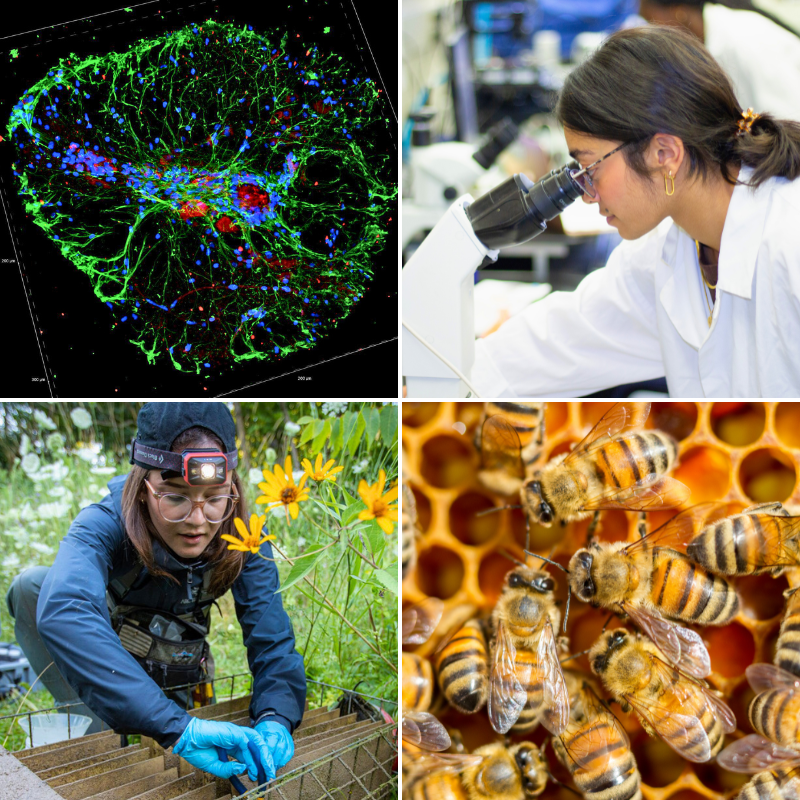
A collaborative specialization is an intra-university graduate field of study that provides an additional multidisciplinary experience for students enrolled in and completing the degree requirements for a Human Health and Nutritional Sciences graduate program. Opportunities for collaborative specializations are available in the areas of Neuroscience, Toxicology, Regenerative Medicine and One Health.

Hear from PhD HHNS Students

I chose the University of Guelph because I was presented with a unique opportunity to conduct teaching research within a discipline-specific department, which was not common at many higher education institutions. I feel very fortunate to have had worked with an advisor who has taken the time to get to know me, both personally and professionally. She made note of both my strengths and my areas that could use improvement. She always makes her students a priority - despite her busy schedule. My advisor had effectively identified which areas I need to work on in my research and communication skills, and consistently pushed me beyond my comfort zone to think and reflect critically on my learning and continued progress.

I completed my undergraduate degree at the University of Guelph, as well as my master's. During this time, I fell in love with the research in the department, as well as the wonderful human beings who work there. The interdepartmental comradery at the University of Guelph is truly unparalleled, and there is always someone willing to lend a helping hand. Being a graduate student at the University of Guelph is a rewarding venture. Being able to spend your days researching a topic that you are truly interested it is a very surreal experience. Although research does not always work out the way you want it to, there is always something that you can take away from the experience.

If there is one word to describe the graduate student experience at U of G, it would be "diverse." You're a researcher, which means that you develop into an expert problem solver. Research is also collaborative because you're constantly working with faculty advisors, so that makes you a teammate. Most graduate students are also teaching assistants and that means you're a mentor. Many graduate students also attend conferences and networking events, which means that you're sharpening your communication skills. In a nutshell, you wear many hats as a graduate student at U of G.
Choosing an Advisor
Check out Before You Apply for helpful advice on identifying and reaching out to faculty members.
- Review current graduate student opportunities in the Department of Human Health Sciences.
- Visit our ReSearch CBS database to search by research topic.
- Visit the Graduate Faculty page for a full list of faculty members who work with graduate students.










Applicants must have a recognized master's degree in a related field obtained with a minimum academic standing of 80% in their postgraduate studies (learn how to calculate your admission average) and the endorsement of a potential thesis advisor. Applicants should have completed a course in statistics. Under exceptional circumstances, transfer from MSc to PhD program without completing the MSc thesis requirements, or admission directly to a PhD program with an appropriate honours degree alone, is also possible.
Admission may be granted in September, January, or May. Completed applications should be uploaded at least one full semester (four months) before the expected date of admission. Applications from international students should be uploaded at least eight months prior to the expected date of admission.
Each applicant must obtain the support of a faculty member willing to serve as their advisor prior to submitting an application.
All components of the application, including transcript(s), graduate certificate(s), grading scale(s), English Language Proficiency tests, assessment forms, a statement of interest, and the name of the faculty advisor must be uploaded no later than two months after an application is submitted through the OUAC portal. Applications that are incomplete after this time period will be closed.
Contact Us:
Dr. Stephen Brown, Graduate Program Coordinator
519-824-4120 ext. 53651
shmbrown@uoguelph.ca
Mira Jashari, Graduate Program Assistant
519-824-4120 ext. 56356
fjashari@uoguelph.ca
Karen White, Graduate Admissions Assistant
519-824-4120 ext. 52730
cbsgrad@uoguelph.ca