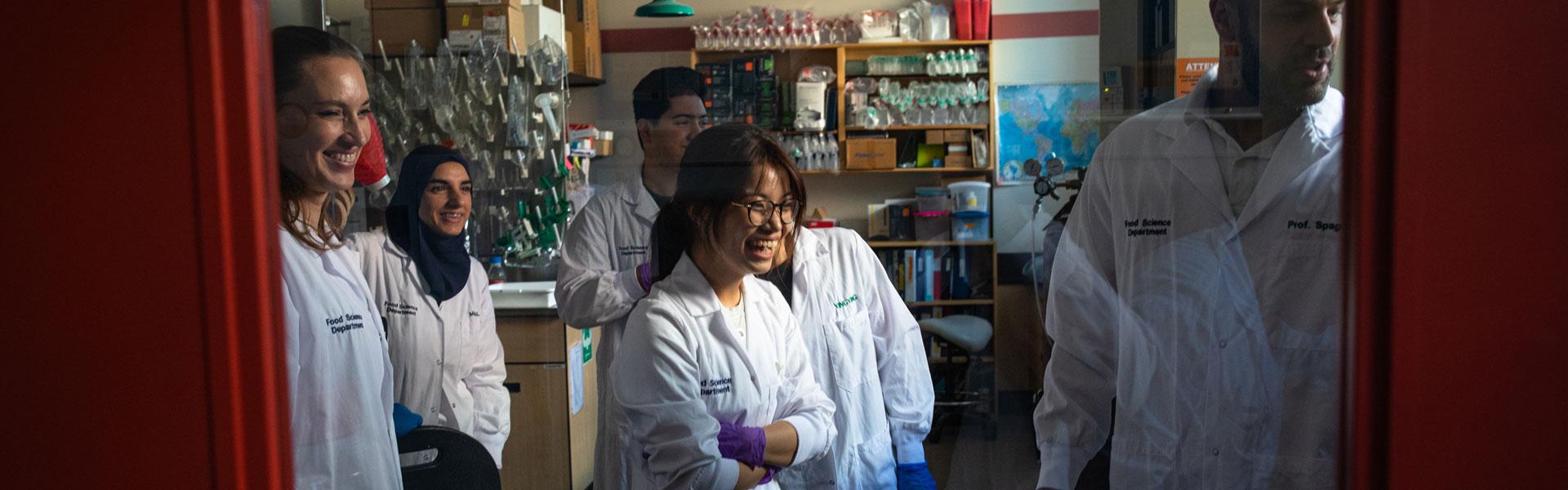
MSc & PhD in Food Science (Thesis/Research)
Combine the pure sciences to develop innovative and healthy food.
This program is offered through the Department of Food Science which focuses its research on enhancing the quality, safety, functionality and nutrition of foods. Research beside world-renowned professors who focus on food safety, food preservation, dairy science, food analysis, sensory science, nutraceuticals and functional foods.
#1 in Canada for food science
Study with the best. The University of Guelph is ranked #1 in Canada for Food Science and Technology by U.S. News and World Report.
Elevate your impact
Broaden your high-paying and leadership career options by achieving a graduate degree. MSc and PhD graduates are highly sought after by Canadian and international food science employers.
Research-based studies
Alongside a faculty member and other students, you will develop, conduct and publish impactful research that focuses on a topic/issue/opportunity in food science.
Excellent food science facilities
Access excellent research facilities and equipment. To learn more about the facilities, check out this Virtual Tour of Food Science Labs and Pilot Plant Facilities.
Leading research centres
Work alongside and in the Canadian Research Institute for Food Safety and the Guelph Food Innovation Centre.
Add unique skills to your resume
Benefit from convenient access to short courses, classes and certificates on beer brewing, ice cream and cheese making.
Both programs are offered in-person at the Guelph campus. The MSc typically takes two (2) years, while the PhD takes three to four (3-4) years to complete.
More information on courses and admission requirements can be found here.
Meet Your Profs

Many consumers are after products that are fresh, minimally processed, and this is really a challenge for the food industry simply because that the products are no longer as stable, so by using antimicrobial active packaging system we should be able to achieve the required shelf-life as well as meeting the consumer demand on the fresh product.

My research focuses on gluten proteins. The functionality of that protein, it's actually a very intriguing protein, it has an unequalled functionality because it builds structures.

Nutraceutical compounds are very popular. They are food derived bioactive molecules meaning that they are isolated from food and concentrated in pill format. Three out of every four Canadians consume these compounds so they're very popular. And so it becomes very important for us to understand how these compounds affect disease pathophysiology as well as disease treatments.

Our research is about is food safety, food microbiology specifically. And really what we're trying to do is either prevent or remove pathogens when they're getting to the food to make it safer.

Because I do sensory evaluation, somebody once told me to trust my senses and I think in the research that I do, that's very important because when you eat a food you immediately need to respond to the sensory properties of that food.

My research focuses on trying to understand the implications of what we eat on health. The area I'm most interested in is looking at lipid replacers for hard stock trans and saturated fats, which are the fats that have negative implications in cardiovascular disease.

Our relationship with food is such a vital component of our health and microbes play a big role in how to diversify our food and also how they interact with our gut microbiota.
How to Apply
As part of the application requirements, you are required to secure a faculty advisor to supervise your program. Faculty profiles describe research programs in more detail and can be found on the Department of Food Science website. Contact the faculty member you are interested in working with to discuss potential research opportunities. We recommend connecting via email.
More details on the U of G graduate program application process here.
Additional Options
You may also be interested in MSc in Food Safety and Quality Assurance (Course-based) or the Master in Dairy Technology Management (Course-based).
Contact
For questions on applying and admissions, contact:
Jon Abram
Department of Food Science
foodinfo@uoguelph.ca
519-824-4120, Ext. 52705
For questions on graduate program options, contact:
Leigh West
Ontario Agricultural College (OAC)
lewest@uoguelph.ca
519-824-4120 Ext. 52101
Hear from Food Science Graduate Students

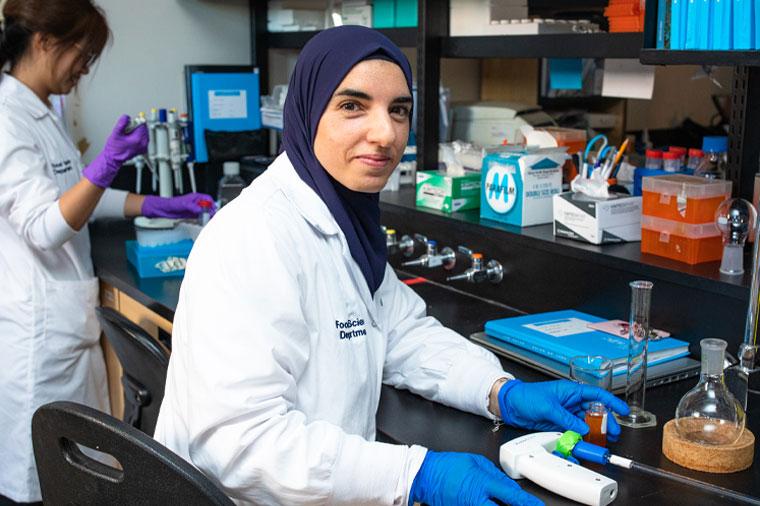
I specifically pursued research at the University of Guelph because the program has more to offer than any other food science program. Moreover, I deeply admire the research conducted by my supervisor, Dr. Loong-Tak Lim.

Food science is a very important field within our industry and in our everyday lives. There was definitely no shortage of finding jobs within the field. There are lots of opportunities for students to get involved and jumpstart their career.