  • Undergraduate Programs
  • Graduate Programs
  • Associate Diplomas
  • Continuing Education
  • Areas of Study
  • Scholarships and Awards
  • OAC Research
  • Research Areas
  • Research Chairs
  • Institutes and Centres
  • About OAC
  • News
  • Our Shared Priorities
  • History
  • 150th Anniversary
  • Contact Us
  • Giving to OAC
  • John Cranfield, Dean of OAC
  • Industry Professionals
  • Alumni
  • Current Undergraduate Students
  • Educators
  • International Students
  • Media
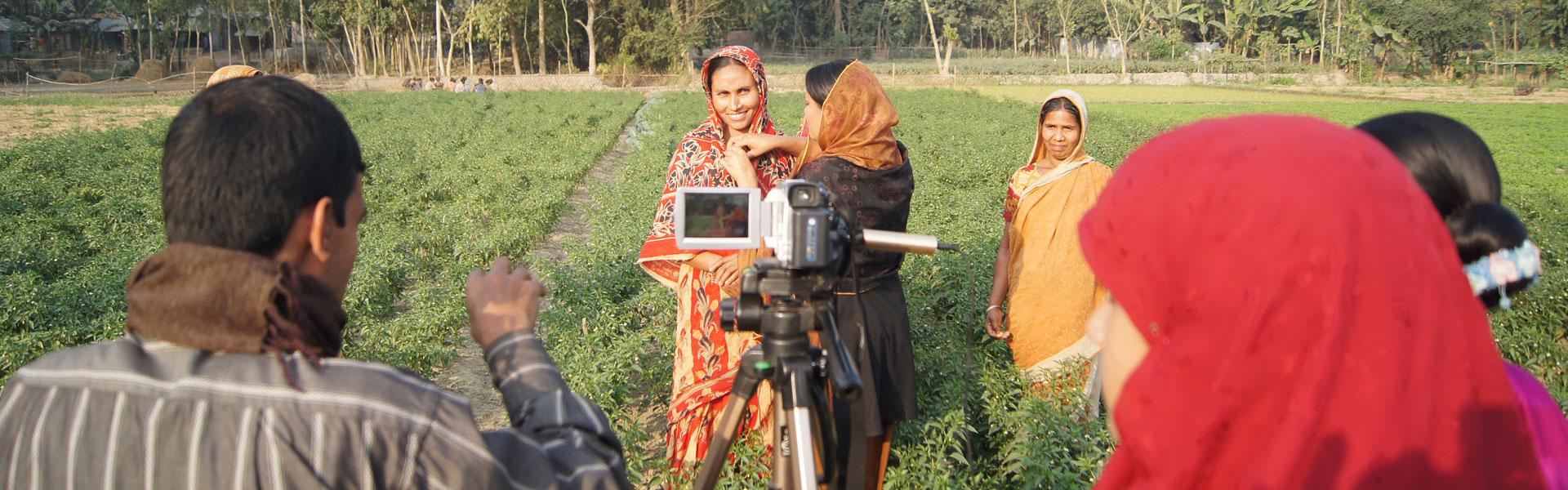
Videographers stand in field with farmers

MSc in Capacity Development and Extension (Thesis/Research)

  1. U of G Homepage
  2. Ontario Agricultural College
  3. MSc in Capacity Development and Extension (Thesis/Research)

Improve life through communication, learning and innovation.

The MSc in Capacity Development and Extension is offered through our School of Environmental Design and Rural Development (SEDRD) and focuses on processes of learning, advocacy, leadership, communication and capacity development in Canada and around the world. Learn to tackle real-world challenges through communication, education, community engagement, leadership, technology and innovative partnerships.

Learner-centred

Join a community grounded in practice-based theories where shared decision-making, open communication, respect for difference, and commitment to conflict management are valued and upheld.

World-class mentorship

Tap into the knowledge of expert faculty and realize your academic potential while engaged with communities, at home and around the world.

Interdisciplinary research

Combine different disciplines and a variety of subject areas to become an applied researcher who responds to community needs in a comprehensive and thoughtful manner.

The program offers full or part-time study, and a thesis or major paper option:

  • Thesis option: Requires that students complete six courses (three core courses, plus two restricted electives, plus one open elective), in addition to the thesis.
  • Major paper option: Requires students to complete eight courses (three core courses, plus four restricted electives, plus one open elective), in addition to the major paper.
Program Brochure
Cost of Tuition/Living
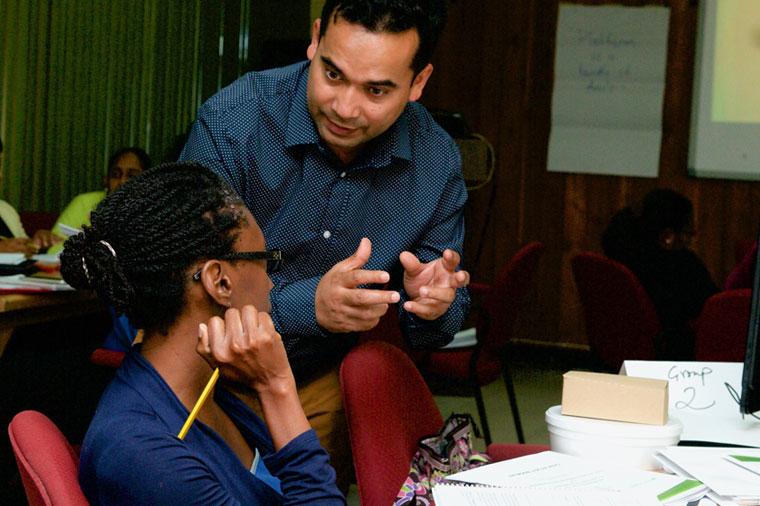
Professor leans down to speak with student working at a table

More information on courses and admission requirements can be found here.

CDE Graduate Calendar

Hear from Our Alumni and Professors

Taku smiling for the camera with greenery behind him.

My research examines the media’s position in engaging, informing, and supporting farming communities about the connection between soil health, carbon capture, and climate change mitigation.

Taku Mundenga, AlumniCapacity Development and ExtensionHear more from Taku
Helen in pink sweater and pink and orange scarf

I do research in the area of knowledge mobilization and communication for agriculture, environment and rural development. Internationally, I work with organizations like the United Nations and the Consultative Group on International Agricultural Research to focus on community based food security and poverty alleviation.

Dr. Helen Hambly, FacultyProfessor, School of Environmental Design and Rural DevelopmentHear more from Dr. Hambly
Ataharul in purple checkered dress shirt

My research seeks to improve the livelihoods of resource-poor communities. I have been collaborating with Canadian and international partners on issues related to agricultural extension and knowledge mobilization, digital development, social shaping of AI, misinformation, climate change and social inequality, and technology adoption.

Dr. Ataharul Chowdhury, FacultyProfessor, School of Environmental Design and Rural DevelopmentHear more from Dr. Chowdhury

How to Apply

Full details are available on the U of G graduate program application webpage.

As part of the application requirements, you are not required to secure a faculty advisor to supervise your program. You will be assigned a temporary advisor upon acceptance to the program.

  • A four year honours degree or equivalent, with an average standing of at least second class honours (B-) in the last four semesters of full-time study or two years of professional work in a related field.
  • The CDE program also participates in a shared collaborative program option with International Development Studies (IDS). Please consult the International Development Studies listing in the Graduate Calendar for a detailed description of the collaborative program including the special additional requirements for each participating Department.

Applicants must complete and submit:

  • Statement of Interest: Your statement of research interest (separate from the one requested within the on-line application form) should outline:
    • your career goals
    • the particular area of research you wish to pursue at the University of Guelph (what is it you want to research?)
  • CV / Resume
    • Please provide a current resume that provides basic information about your academic background and professional interests and experience.
    • Work experience in a related setting is considered especially useful in applying theory to practice and to identify research needs and topics.

Your application is not considered complete until all of these documents have been submitted. Please be aware that any material collected towards a graduate application, (for example transcripts, reference letters, etc.) must be dated within the past year. Any material dated prior to a year from the application date will not be accepted.

  • July 1st each year (domestic students)
  • April 15th each year (international students)

Note: Only Fall semester entry is available for this program. More details on the U of G graduate program application process here.

  • Securing a Study Permit:

    • To study in Canada, all students must apply for a Study Permit at the nearest Canadian Embassy, High Commission or Consulate. A student authorization is commonly called a student visa. For you to be considered for a student visa, the Canadian immigration officer will need to see your letter of acceptance from the University of Guelph, proof of citizenship and proof of funds for one academic year. The University of Guelph and Immigration Canada expect international students to have enough funds for the duration of their study in Canada, and especially during their first year. The issuance of a student visa is strongly based on your ability to finance your education. The student visa is usually issued for the duration of your academic program. Please note that you will not be allowed to register at the University of Guelph if you do not have a valid Study Permit.
  • English Proficiency:

    • If your first language is not English, and you do not have a degree from an English speaking University, you must provide an official English Testing score from an acceptable source. More information is available at the Graduate and Postdoctoral website under English Language Proficiency.
  • Funding

    • Students who are neither Canadian citizens nor landed immigrants need to secure sufficient financial support for their graduate studies. It is very important that you secure financial support and provide the Office of Graduate and Postdoctoral Studies with evidence of sufficient funding for two years of study in Canada. The MSc Program in Capacity Development and Extension does not offer financial support to students and any funding announced to students already enrolled in the program involves competitive applications.
    • Here are estimates for tuition and fee costs summarized. Specific costs related to tuition and fees are listed on the Student Financial Services website.
  • More resources for international applicants are available on the U of G Graduate & Postdoctoral website.

Additional Study Options

You may also be interested in the MSc in Food, Agricultural and Resource Economics, or the MSc in Rural Planning and Development.

OAC Grad Studies Viewbook

Contact

For questions on applying and admissions:

Lorena Barker
School of Environmental Design and Rural Development
cde@uoguelph.ca
519-824-4120, Ext. 56780

For questions on program options:

Leigh West
Ontario Agricultural College (OAC)
lewest@uoguelph.ca
519-824-4120 Ext. 52101

Hear from CDE Graduate Students

Serena smiles in orange collared jacket

When I was looking at the CDE program, I reached out to a couple of graduated students in different fields to talk about their experience in the program. This information was very valuable and helped me to make a confident choice.

Serena Viola, Graduate StudentMSc in Capacity Development and ExtensionHear more from Serena
Austin stands in front of a grey brick wall with ivy on it

My graduate experience has many parallels to my undergraduate experience, however, my favorite difference is that the research I’m doing now allows me to target what aspect of rural development I find most impactful.

Austin Brown, Graduate StudentMSc in Capacity Development and ExtensionHear more from Austin
The relationship between me and my supervisor was very positive. She is one of the best professors I have ever had. She provided constant support from the beginning of my graduate program, and she guided me in each stage of my research. She was always an inspiration.
Faria Rashid2017 MSc in Capacity Development and Extension
Hear more from Faria